KNEE DRIVE / SINGLE LEG BOX STEP UP: SPLIT STANCE / MINI HOP
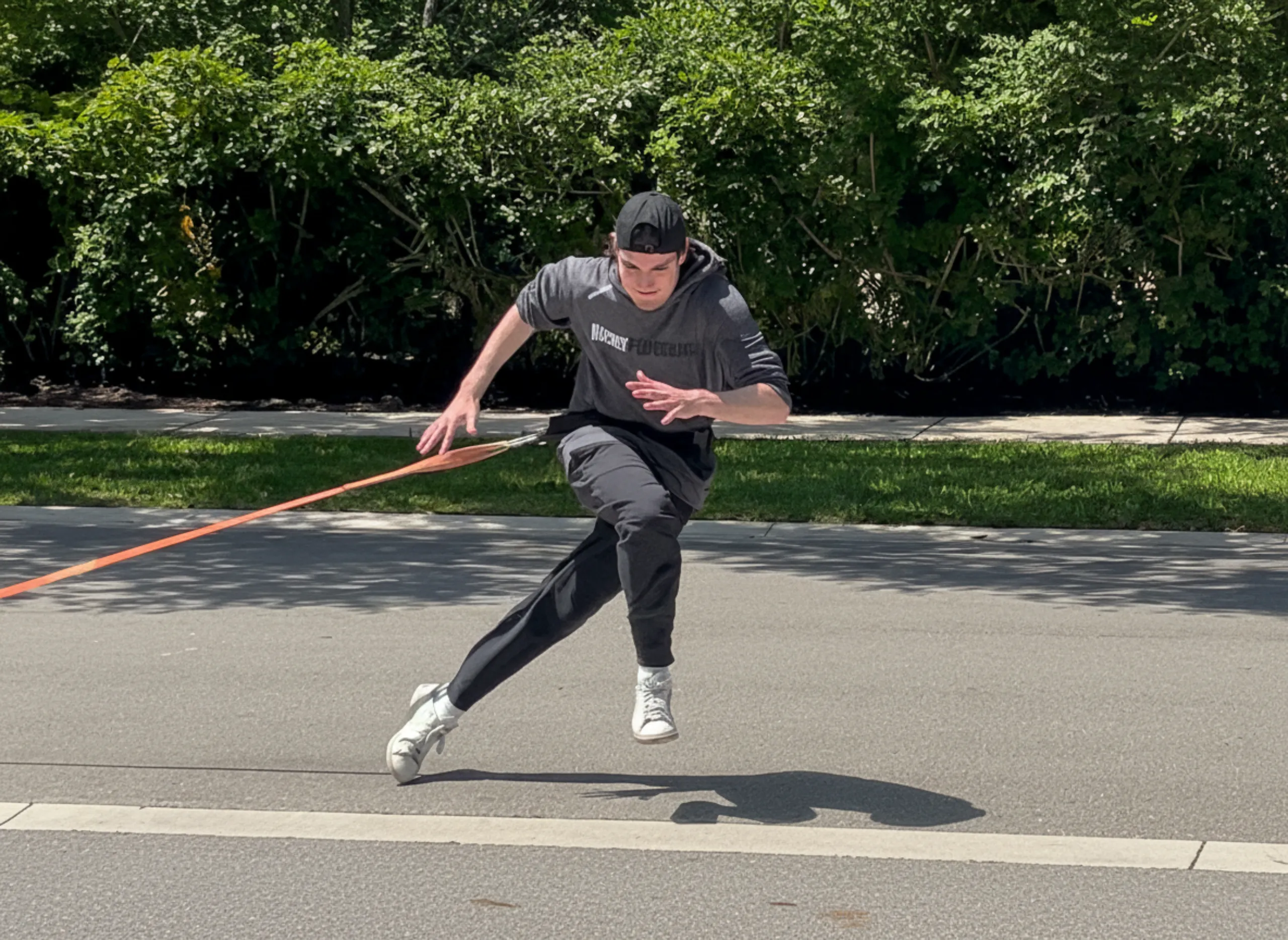
KNEE DRIVE / SINGLE LEG BOX STEP UP: SPLIT STANCE / MINI HOP
MAX VELOCITY
Max Velocity is the third phase of Speed Mechanics. Although a hockey stride is greatly dependent on the Start and Acceleration Phase, Mav “V” Training does address some of the sprint disciplines which are important to improving speed and skating mechanics.
The three points of emphasis with regard to Max Velocity Training are; Posture, Knee Lift, and Recovery/Turnover. Most early skaters have little control of posture, relative to lack of balance and stability. They also tend to have a “scooting” type stride which is short with little to no knee lift. As these training qualities improve by performing proper speed mechanics, the athlete will become more confident through balance and strength, which allows for a longer stride, greater force production and stride turnover.
FIRST STEP DECELERATION MECHANICS
First Step Deceleration Mechanics are extremely important relative to a powerful skating stride. The glide leg must remain stable with the knee bend at ideally 90°. With a slightly forward posture tilt, the glide knee is beyond a normal waist height. It’s imperative that the glide leg remain stable as the drive leg generates power through the Drive or Push Phase.
Knee Drive / Single Leg Box Step-Up: Split Stance / Mini Hop
- You’ll need a 12”- 18” Box
- Begin in a Split Stance, 1ft from box
- Arms opposite foot position, elbow bent 90°, hands traveling from chin to waist
- Start with a quick Mini Hop to preload your step
- Without pause, Quickly Step onto box, exchanging arm position.
- Your forward posture should be in direct line with your straight back leg
- Pause for 2 sec and return to starting position
- You may use a long resistance band securely attached from behind and around your waist for added resistance