HIGH KNEE RUN: LONG ARM SLED PUSH
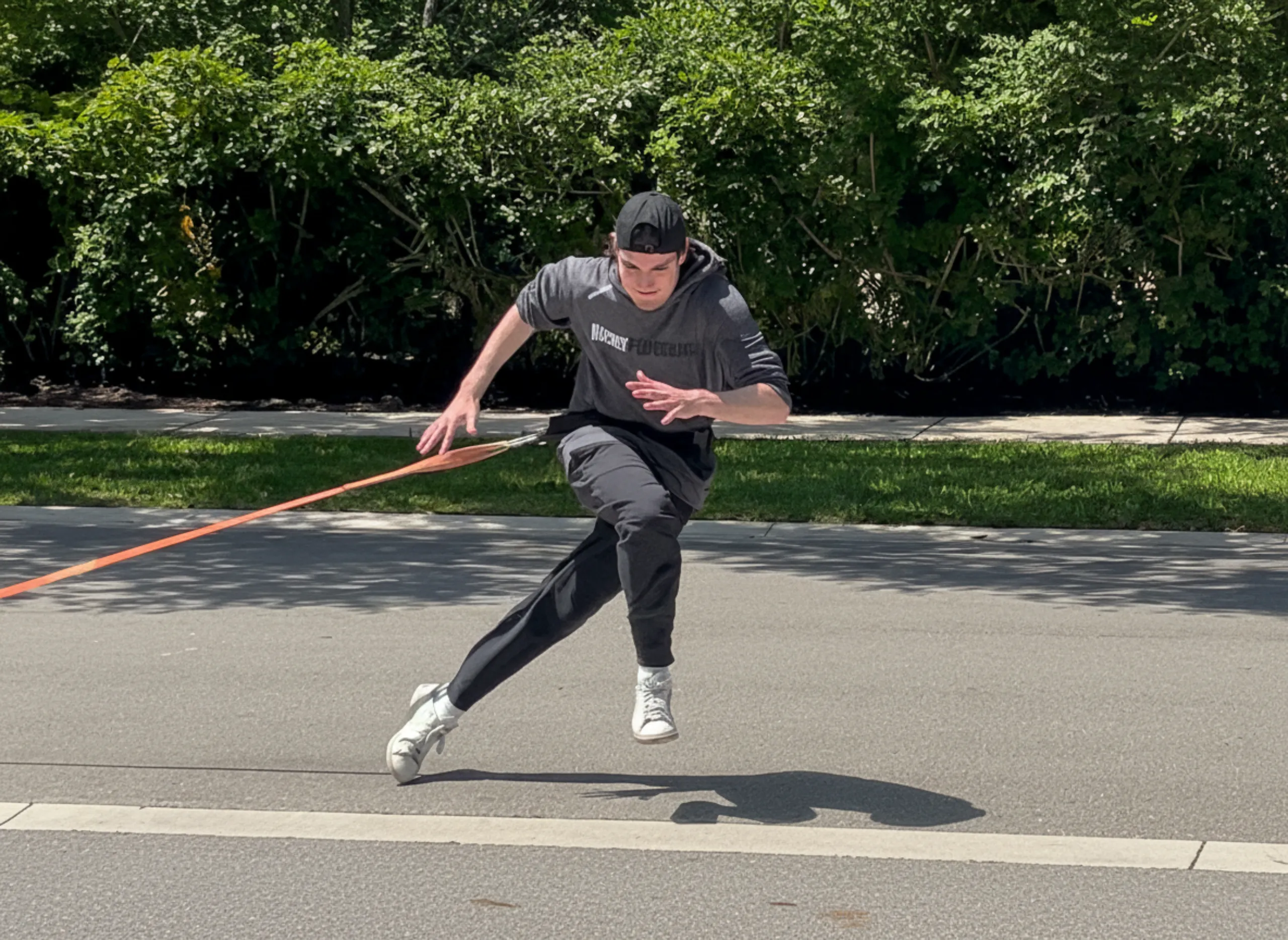
HIGH KNEE RUN: LONG ARM SLED PUSH
MAX VELOCITY
Max Velocity is the third phase of Speed Mechanics. Although a hockey stride is greatly dependent on the Start and Acceleration Phase, Mav “V” Training does address some of the sprint disciplines which are important to improving speed and skating mechanics.
The three points of emphasis with regard to Max Velocity Training are; Posture, Knee Lift, and Recovery/Turnover. Most early skaters have little control of posture, relative to lack of balance and stability. They also tend to have a “scooting” type stride which is short with little to no knee lift. As these training qualities improve by performing proper speed mechanics, the athlete will become more confident through balance and strength, which allows for a longer stride, greater force production and stride turnover.
INTEGRATION
During the integration phase, we typically have the athlete perform the training discipline with some form of resistance to help maintain proper sprinting posture and develop musculature specific for that movement pattern.
High Knee Run: Long Arm Sled Push
- You’ll need a Push Sled with High Handles
- Stand erect, feet hip width apart, facing forward to path of intent. Push sled in front.
- Add a slight amount of weight to the sled, depending on the training surface and size and age of athlete. The amount of weight should provide enough resistance to maintain proper sprint posture
- Maintaining Posture, High Knee Run on the balls of your feet.
- Be quick and light on your feet. Turnover is the key, not forward speed
- Your back leg should achieve full extension and be in direct line with your spine
- Your drive knee should achieve waist height, shin angle in line with spine, foot dorsi flexed, toe up
- The goal is to engage core and maintain a proper forward posture with rapid turnover and little forward speed